Keto gets talked about like an influencer invention. It isn't. Doctors built it in a hospital in 1921 to stop seizures in children, long before anyone used it to lose weight. That history is a useful guide to what keto is genuinely good at, what it's simply popular for, and where the marketing has run ahead of the evidence. This guide starts simple and goes deeper as you scroll. By the end you'll understand not just what keto is, but the questions nutrition scientists are still arguing over, with the papers so you can check us.
General information, not personal medical advice. This is a YMYL health topic — read the safety section, and speak to your GP or an Accredited Practising Dietitian before starting keto, especially with a health condition, medication, or family history of heart disease.
Keto is a very-low-carbohydrate, high-fat diet. The classic split is roughly 70% fat, 20% protein, 10% carbs, which usually means under about 50g of carbs a day, sometimes as low as 20g, less than one plain bagel.[1][2] The fat isn't really the point; the carb restriction is. Drop carbs far enough and the body runs low on its easy fuel, glucose, and starts burning fat instead.
Your body runs on two main fuels, glucose and fat, a bit like a hybrid car. Most of the time it burns glucose because it's quick and easy. Starve it of carbs and the liver begins turning fat into ketones, a backup fuel the brain can actually use. Running on that backup is ketosis.
Doctors noticed centuries ago that fasting reduced seizures, but nobody can fast forever. In 1921, Dr Russell Wilder at the Mayo Clinic designed a high-fat, very-low-carb diet to mimic fasting metabolism without the starvation, and coined the term "ketogenic diet."[3][4] That same year, Rollin Woodyatt identified the three ketone bodies the liver makes when carbs are scarce: acetoacetate, beta-hydroxybutyrate (BHB) and acetone.[5]
Keto spread through the 1920s and 30s, then faded mid-century as anti-seizure drugs arrived. It was revived in the 1990s on the back of high-profile children's cases and a Hollywood push, and MCT-oil variants, pioneered by Huttenlocher in 1971, made the stricter versions easier to live with.[5] The key point: keto's strongest and oldest evidence base is still epilepsy, not weight loss.[3][6]
Your default fuel is glucose from carbs, and it's the brain's usual energy source. Cut carbs low enough and glucose runs short, insulin falls, and the liver ramps up breaking fat into ketone bodies, which (unlike fatty acids) can cross the blood-brain barrier to fuel the brain.[3][5] That fat-burning, ketone-fuelled state is ketosis: a normal, evolved mode that's also what carries you through a fast, not an emergency.[7]
There are several: standard keto, high-protein keto, MCT keto, plus the Modified Atkins Diet (MAD) and low-glycaemic-index treatment used clinically for epilepsy.[3][6] "Keto" in a lab and "keto" on Instagram are often two different things, which is a recurring source of confusion in the research itself. → Atkins · → Low Carb
Ranked by evidence quality, strongest first.
Keto is still an established, evidence-based therapy for drug-resistant epilepsy, especially in children. It's the use keto was invented for, and where the data runs deepest.[3][6]
In the short term (under about 6 months), keto reliably lowers weight and improves blood-sugar control.[9] The Virta Health continuous-care trial reported mean HbA1c falling from 7.6% to 6.3% alongside about 14 kg of weight loss.[14] Durability is the catch, though: a systematic review found type 2 diabetes remission as high as about 62% at one year, falling to around 13% by year five, with some weight regain and rising blood sugar.[15] Major diabetes bodies now recognise carbohydrate restriction as one legitimate option for managing type 2 diabetes.
A 2023 umbrella review of meta-analyses of randomised trials (BMC Medicine) found moderate-to-high-quality evidence that keto supports weight loss, along with lower triglycerides and lower HbA1c.[6] Most of that early advantage comes down to appetite suppression (fat and protein are filling, and ketones may blunt hunger) plus an initial drop in water weight, rather than any metabolic free lunch.[1][8] Head to head, keto often beats low-fat early on, but the gap tends to shrink over time as adherence slips and total calories reassert themselves.[9][10]
This is where most consumer pages stop and ours keeps going. These are live, unresolved arguments among named researchers, presented as debates rather than settled facts. Tap to expand.
The central controversy in modern obesity science.
Refined carbs spike insulin, insulin pushes calories into fat storage, and the resulting "internal starvation" leaves you hungrier. On this view carbs aren't just calories, they're hormonally fattening. (2021 AJCN.)[8][9]
Tightly controlled metabolic-ward studies found that swapping carbs for fat produced only tiny differences in fat loss, which points back to total calories and appetite, with energy-dense processed food as the real driver. (2022 AJCN.)[8]
It's unresolved, but both camps agree on the practical part: highly processed, refined carbohydrates are a problem.[9] The open question is the mechanism, not whether cutting junk carbs helps. Be sceptical of anyone who tells you this is settled either way.
The most clinically important open question. Keto often improves triglycerides and HDL, but it can also raise LDL ("bad") cholesterol, sometimes dramatically. In 2017, Dave Feldman noticed that lean, athletic people with low triglycerides and high HDL sometimes show huge LDL rises on keto, a pattern later named the Lean Mass Hyper-Responder (LMHR) phenotype (Norwitz, Soto-Mota, Feldman, Ludwig and colleagues).[10] Documented cases include LDL jumping from about 95 to 545 mg/dL.[10]
LDL is causally linked to atherosclerotic heart disease (European Atherosclerosis Society consensus). A big LDL rise deserves clinical attention regardless of the favourable HDL/triglyceride picture.[12]
The pattern may be a benign, mechanistic consequence (the "Lipid Energy Model") of burning fat for fuel in lean people, rather than the usual artery-clogging profile. The KETO Trial (2024, JACC: Advances) imaged coronary plaque in about 80 hyper-responders with LDL ≥190 against matched controls.[11]
If you go keto, get your lipids checked. A large LDL rise is a "see your doctor," not a "the internet says it's fine."
The best long-horizon data doesn't come from keto trials (they're too short) but from cohort studies. Seidelmann et al. (2018, Lancet Public Health) followed about 15,400 adults (ARIC) and pooled 432,179 people, and found a U-shaped curve: lowest mortality around 50–55% of energy from carbs, with higher mortality at both low (under 40%) and high (over 70%) intakes.[13]
Here's the part that matters most: what you replace the carbs with decides the risk. Swapping carbs for animal fat and protein was linked to higher mortality; swapping for plant fat and protein, to lower mortality.[13] So "low-carb" isn't one single thing: a plant-forward low-carb diet and a bacon-and-butter one are very different bets. Cohort data can't prove cause and effect (there's confounding, and food questionnaires have limits), but it's the strongest signal we have on the long game.
A vivid, well-run scientific fight. Australia's Prof Louise Burke ran tightly controlled studies on elite race walkers: keto-adaptation massively increased fat-burning but hurt exercise economy, meaning it cost more oxygen to move at race pace, and it wiped out the performance gains from intensified training. The high-carb group got meaningfully faster; the keto group didn't.[16][17] The findings were replicated.[16] Prof Tim Noakes argues the opposite for endurance, and the two published a formal point-counterpoint in MSSE in 2024.[17]
For elite high-intensity endurance, keto tends to hurt, because carbs are the more oxygen-efficient fuel near maximum effort. For recreational athletes the effect is mixed, and for very-low-intensity or specific contexts, fat-adaptation may suit some people.[17] Keto is not a free upgrade for performance, and at the pointy end it can cost you.
"You must eat fat to burn fat."
Dietary fat isn't the same as body fat. Keto works largely by curbing appetite so you eat less overall, and you can lose body fat while eating relatively little fat.[8]
"Calories don't count on keto."
They do. Eat far more than you burn and you won't lose weight, keto or not.[10] "Eat all you want" is the most oversold claim in the space.
"Ketosis is dangerous."
This confuses ketosis (a normal fuel state) with ketoacidosis (a dangerous condition seen mostly in type 1 diabetes). Ketoacidosis in people without diabetes is rare.[1]
"The carb-insulin model proves carbs make you fat."
Genuinely contested — see Debate 1. Confident claims either way run ahead of the evidence.[8]
"Keto flu means it's harmful."
That first-week fatigue and headache is a short-lived adjustment as you shed water and electrolytes. It usually passes quickly, and it's one reason electrolytes come up so often with keto. → electrolytes
"All keto is equal."
A whole-food, plant-forward low-carb diet and "dirty keto" diverge sharply on the long-term data (Debate 3). Food quality isn't a footnote — it may be the whole game.
Keto has genuine uses: drug-resistant epilepsy, and a strong short-to-mid-term option for weight and type 2 diabetes for some people.[6][15] It may not suit, and can be risky for, people who are pregnant or breastfeeding, have type 1 diabetes, kidney or liver disease, a history of disordered eating, or certain rare metabolic disorders.[1] Common early side effects include keto flu, constipation, and, importantly, shifts in cholesterol that are worth monitoring (Debate 2).
Sustainability is the quiet decider. The benefits only count if you can actually live on it, and long-term adherence is where many people come unstuck. Some of the data trends, like diabetes remission fading to about 13% by year five, partly reflect that reality.[15]
Referral gate: This is general information, not personal advice. Before starting keto — especially with a health condition, medication, or a family history of heart disease — speak to your GP or an Accredited Practising Dietitian (APD). In Australia, find one via Dietitians Australia.
The NHMRC Australian Dietary Guidelines don't single keto out, and mainstream Australian guidance still centres whole grains, vegetables, fruit and legumes. Keto is an evidence-supported option for specific goals and specific people, sitting alongside other approaches rather than automatically above them.
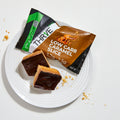
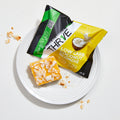
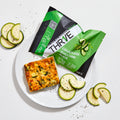
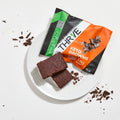
Eating lower-carb and want the admin taken care of? THR1VE has meals chosen for a lower-carb lifestyle, with net carbs shown per serve, made fresh and delivered chilled.
Browse lower-carb meals →Educational science above is general information with citations. THR1VE meals are described by their net carbs per serve; we don't claim they cause weight loss or health outcomes. "Keto" / "Low Carb" is a collection name, not an on-product claim. (FSANZ 1.2.7 + ACL.)
Usually 2 to 4 days on about 20 to 50g of carbs a day, though it varies from person to person.[1]
No, keto is a stricter subset of low-carb eating. → Low Carb
They're related, but Atkins reintroduces carbs in phases. → Atkins
Appetite often drops on its own, but calories still set the ceiling.[10]
★ = strong primary/authoritative source. Non-starred are secondary/explanatory — fine for a consumer page. Named-researcher attributions are accurate to the cited works.

We created THR1VE to transform the health and wellness of all Australians, through the delicious simplicity of real food nutrition and an active lifestyle.
Have a question? We are here to help!
support@thr1ve.meCall Us: (02) 7251 6686
Start a chat with our team©THR1VE 2025