Protein is the one macronutrient almost nobody argues you should eat less of, but there's real disagreement about how much is "enough," a persistent myth that too much wrecks your kidneys, and a genuinely surprising theory that protein quietly controls how much of everything else you eat. This is the evidence-led version: the number that actually matters for muscle, the myths worth burying, and why protein is the smartest lever most people aren't pulling.
General information, not personal medical advice. If you have kidney disease or another medical condition, set your protein targets with your GP or an Accredited Practising Dietitian.
Protein supplies the amino acids your body uses to build and repair everything from muscle to enzymes. Australia's official minimum (RDI) is modest, about 0.75 g/kg/day for women (~46 g) and 0.84 g/kg/day for men (~64 g), rising after age 70. But that number was set to prevent deficiency, not to optimise body composition, satiety or healthy ageing, which is where the interesting debate begins.
The RDI keeps you from getting sick. Researchers like Stuart Phillips (McMaster) argue the optimal intake, for holding onto muscle as you age, staying full while dieting, and building lean mass, is meaningfully higher. Australia's Acceptable Macronutrient Distribution Range for protein is 15–25% of energy, already a wide window.
Protein is the most satiating macronutrient and has the highest thermic effect (your body burns more energy just digesting it). It also delivers leucine, the amino acid that flips the switch on muscle protein synthesis; a per-meal "leucine threshold" (~2.5–3 g) is why spreading protein across meals, not loading it all at dinner, is often recommended.
The definitive answer comes from Morton, Schoenfeld, Phillips et al. (British Journal of Sports Medicine, 2018), a meta-analysis of 49 studies and 1,863 people. Protein supplementation meaningfully boosts resistance-training gains (fat-free mass up ~0.30 kg), but with a clear breakpoint at around 1.62 g/kg/day (95% CI 1.03–2.20). Beyond that, more protein didn't add more muscle.[1] That ~1.6 g/kg figure is the single most useful number on this page.
Higher protein helps you feel fuller on fewer calories and, critically, preserves lean muscle while you lose fat, which protects your metabolic rate. It's the macronutrient that makes a calorie deficit livable.
From middle age, muscle is "use it and feed it or lose it." Higher protein (~1.0–1.2 g/kg and up) plus resistance training is one of the best-evidenced defences against age-related muscle loss.
Tap to expand.
The stubbornest myth, and the evidence is firmly against it in healthy people. Devries et al. (Journal of Nutrition, 2018) meta-analysed 28 studies (including people with obesity, type 2 diabetes and high blood pressure, but not existing kidney disease) and found higher-protein diets had no adverse effect on kidney function (GFR).[2] The myth comes from a 1982 hyperfiltration hypothesis over-extrapolated from people who already had kidney disease. Protein restriction matters in established chronic kidney disease, not as a precaution for healthy people.
Also reversed. The old "acid-ash" idea held that protein acidifies the blood and pulls calcium from bone. Fenton et al. (2009) showed higher acid excretion raised urinary calcium but had no effect on calcium balance, no net loss from bone. The National Osteoporosis Foundation meta-analysis (Shams-White et al., 2017) found protein neutral to beneficial for bone.[3][4]
Humans prioritise hitting a protein target, so when the diet is protein-dilute (as ultra-processed food tends to be), we keep eating, and overshoot total calories, until we get enough protein. (Obesity Reviews 2005; updated Obesity 2019.)[5]
If true, protein-adequate meals aren't just for gym-goers; they're a lever against overeating in general. Contested but influential, and it dovetails with the ultra-processed-food debate.
"More protein always means more muscle."
~1.6 g/kg captures the benefit; up to ~2.2 g/kg is a defensible athletic ceiling. Beyond that, no extra muscle.[1]
"All protein is equal."
DIAAS ranks quality: whey ~1.09, milk ~1.14, egg ~1.13 (excellent); soy ~0.90, pea ~0.82 (good); wheat ~0.40, rice ~0.37 (lysine-limited). Plants combine to close the gap.[6]
"Timing is everything, the anabolic window."
Hitting your daily total matters most; even distribution is a useful optimisation, not make-or-break.
High protein suits almost everyone: people losing weight (satiety plus muscle retention), athletes, and especially older adults. The one genuine caution is pre-existing chronic kidney disease, where protein targets should be set medically. For healthy kidneys and bones, the "too much protein is dangerous" worry isn't supported.
Referral gate: General information, not personal advice. If you have kidney disease or a medical condition, set protein targets with your GP or an Accredited Practising Dietitian.
Most Australians already meet the protein RDI, so the opportunity is quality and distribution, plus higher targets for older adults and those building or protecting muscle. Dietitians Australia emphasises lean and plant proteins.
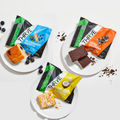
This is where the numbers do the work. THR1VE builds high-protein meals with the grams shown per serve, real food, portioned, delivered fresh, so hitting your target doesn't mean cooking chicken breast for the fifth night running. Top up with THR1VE protein powder when you need to.
For muscle, aiming toward ~1.6 g/kg/day captures the benefit.[1]
Not in healthy people, the evidence is clear. Existing kidney disease is the exception.[2]
Individually lower quality (DIAAS), but combinable to close the gap.[6]
Total daily intake matters most; spreading it across meals is a useful bonus.
★ = strong primary source.

We created THR1VE to transform the health and wellness of all Australians, through the delicious simplicity of real food nutrition and an active lifestyle.
Have a question? We are here to help!
support@thr1ve.meCall Us: (02) 7251 6686
Start a chat with our team©THR1VE 2025