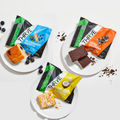
Gluten free is two completely different things at once: a medical necessity for people with coeliac disease, and a wellness trend for millions who feel better off wheat but have never been tested. Conflating them does real harm in both directions. It trivialises a serious autoimmune disease, and it sends healthy people onto a more expensive, often less nutritious diet for a reason that may not be gluten at all. Here's the honest science, including the twist that reframed the whole "gluten sensitivity" conversation.
General information, not personal medical advice. This is a YMYL health topic. If you suspect you react to gluten, get tested for coeliac disease before removing it, and speak to your GP or an Accredited Practising Dietitian first.
Gluten is the stretchy protein complex (gliadins plus glutenins) in wheat, with close relatives in rye and barley. It's what makes dough elastic. For most people it's harmless. For a specific group it isn't, and the reason it isn't differs completely depending on which condition you have.
In coeliac disease, gluten isn't just poorly tolerated, it triggers an autoimmune attack. In genetically susceptible people (carrying HLA-DQ2 or DQ8 genes), fragments of gliadin provoke the immune system to damage the lining of the small intestine, flattening the villi that absorb nutrients. That's measurable, biopsy-confirmable damage, not a vague "sensitivity." Left unmanaged it causes malabsorption, deficiencies and long-term complications.
Wheat allergy is a different mechanism again, a classic IgE-mediated allergic response. Non-coeliac gluten sensitivity (NCGS) is the contested one: real symptoms (bloating, fatigue, gut discomfort) without the coeliac antibodies or the intestinal damage. What actually causes it is where the science gets interesting.
Strict, lifelong gluten avoidance is the only treatment, and it works. The gut heals, symptoms resolve, complications drop. Not optional, not a preference.
For people without coeliac disease or wheat allergy, there's little good evidence that going gluten free improves health. And gluten-free processed foods are frequently lower in fibre and B-vitamins, higher in fat, sugar and cost, and can lower overall diet quality. "Gluten free equals healthier" is a myth for the general population.
The most important plot twist in this field, and it came out of Australia. Tap to expand.
Their rigorous 2013 crossover trial found that once background FODMAPs (fermentable carbs, mainly fructans, also abundant in wheat) were reduced, gluten had no specific, dose-dependent effect, with strong nocebo responses, people felt worse when they believed they'd eaten gluten.[1]
A later trial found fructans, not gluten, reproduced the symptoms.[2] Much of what people call "gluten sensitivity" may actually be FODMAP intolerance / IBS.
If the trigger is FODMAPs, a targeted low-FODMAP approach with a dietitian is more precise, and less restrictive, than blanket gluten avoidance. Get tested for coeliac disease first, then investigate FODMAPs before assuming gluten.
"Gluten free is healthier."
Not for people without coeliac disease, often the opposite nutritionally.
"I feel better off wheat, so it must be the gluten."
"I'll just cut gluten, then get tested later."
Removing gluten first can make coeliac tests come back falsely normal, so you never get the diagnosis you need.
"A little cross-contamination is fine."
It matters enormously for coeliacs and barely at all for a wellness dieter, another reason the two groups shouldn't be lumped together.
Infographic 3, the myth-vs-science card set above.
Medically essential: coeliac disease, wheat allergy, dermatitis herpetiformis. Individual / possibly: IBS or self-identified NCGS, but a low-FODMAP approach with a dietitian may be more effective and less limiting. Not needed: the general public chasing "clean eating."
Critical: If you suspect you react to gluten, get tested for coeliac disease before removing it. Talk to your GP or an Accredited Practising Dietitian first. Going gluten free early can invalidate the diagnosis.
Coeliac disease affects around 1 in 70 Australians, and an estimated 80% remain undiagnosed (Coeliac Australia), roughly 367,000 Australians (Wesley Research Institute).[3][4] Australia has the world's strictest gluten-free food standard: FSANZ defines "gluten free" as containing no detectable gluten (most other countries allow up to 20 ppm).
Eating this way is easier with fresh, real-food meals that skip the fibre-poor, ultra-processed gluten-free aisle. Browse our menu and check the ingredient and allergen details on each meal.
Browse the menu →Only if you have coeliac disease, wheat allergy or a related condition. Get tested before deciding.[3]
Not for most people; gluten-free processed foods are often less nutritious.
No detectable gluten, the strictest standard in the world.
★ = strong primary source.

We created THR1VE to transform the health and wellness of all Australians, through the delicious simplicity of real food nutrition and an active lifestyle.
Have a question? We are here to help!
support@thr1ve.meCall Us: (02) 7251 6686
Start a chat with our team©THR1VE 2025